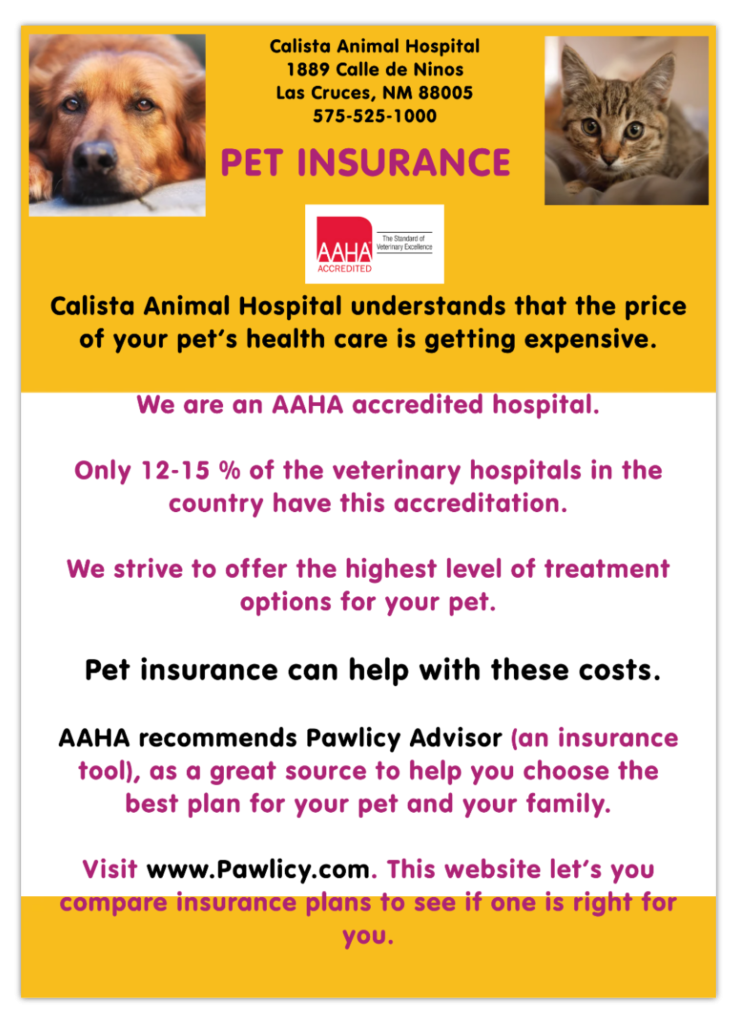
Pet Insurance Information
Pet insurance pays in part or complete total for veterinary treatment of the insured person’s ill or injured pet. Some policies will pay out when the pet dies, or if it is lost or stolen.
As veterinary medicine is increasing in expense of medical techniques and drugs; owners have a higher expectation for their pet’s health care and standard of living than previously, leading to the market for pet insurance increasing.
Pet insurance companies are beginning to offer the pet owner more of an ability to customize their coverage by allowing them to choose their own level of deductible or co-insurance. This allows the pet owner to control their monthly premium and choose the level of coverage that suits them the best.
Some of the differences in insurance coverage are:
- Whether congenital and hereditary conditions (like hip dysplasia, heart defects, eye cataracts or diabetes) are covered
- How the reimbursement is calculated (based on the actual vet bill, a benefit schedule or usual and customary rates)
- Whether the deductible is on a per-incident or an annual basis
- Whether there are any limits or caps applied (per incident, per year, age or over the pet’s lifetime)
- Whether there is an annual contract that determines anything diagnosed in the previous year of coverage is considered pre-existing the next year.
Once the visit is completed, all you need to do is submit a claim through you pet insurance provider, and they will reimburse you back. Sometimes this does require information from the veterinary hospital, which we are more than happy to rely back to the company.
Source: Pet Insurance
Example of Various Pet Insurances